
- EBSCO is now offering a subscription-based collection of 70,000 academic e-books.
- Robo-libraries! AKA the Redbox for books.
- Library book returned after 100 years. That's like $36,525 of overdue fines at my library.
- Publishers oppose bill on scholarly open access. What a surprise.
- Four Seriously Cool Information Resources.
Theologian Thursday: John Wesley 1703-1791
I'm really excited to start Theologian Thursday as a weekly feature on the blog. I know, it's totally nerdy, and probably very few of you will have any interest in it, but I hope you'll at least learn something new or check out something to read.


For my first Thursday theologian, I just had to pick the itinerant founder of the Methodist movement, John Wesley. You may know him as the man who said, "Cleanliness is next to godliness." While he was a committed Anglican to the end, and would never really admit to starting a new church, his sermons and writings have influenced the formation of the Methodist church, as well as off-shoots in the holiness movement like the Wesleyan Church, the Salvation Army, the Church of God, and the Church of the Nazarene (to which I owe my education and my paycheck).
He was an intense journal-keeper, a prolific speaker, and a committed teacher. He had a heart for the poor, and did what he could to follow Jesus's command to care for them, even giving away most of his money.
Other reasons why John Wesley was pretty cool:
Seriously. That's it. There's so many, it'll keep you busy for a long time. I recommend The General Deliverance and A Plain Account of Christian Perfection (that one's kind of a collection of sermons mushed together as one work). Those will give you a good idea of what he's about, namely: means of grace (spiritual disciplines) and works of mercy (helping others). I believe those each have their own sermons as well.
Ratings:
(To read more about my rating system, click HERE.)Gender Equality:
Wesley actively encouraged women to listen to his sermons and seek a life of holiness, and many people who claimed to have attained his proposed "Christian Perfection" were women.
Environmental Sensibility:
This dude knew God loved all creatures, and lived and preached accordingly. He was also a minimalist--I think he only owned a few pairs of clothes.
Heretical Tendencies:
Though he had somewhat radical ideas about how to live out the Christian faith, he remained well within orthodoxy and stayed a member of the Anglican church until his death.
General Badassery:
I mean, an electrical healing machine??? Come on.
Lastly, one of my favorite John Wesley quotes:
photos from The Wesley Center
For my first Thursday theologian, I just had to pick the itinerant founder of the Methodist movement, John Wesley. You may know him as the man who said, "Cleanliness is next to godliness." While he was a committed Anglican to the end, and would never really admit to starting a new church, his sermons and writings have influenced the formation of the Methodist church, as well as off-shoots in the holiness movement like the Wesleyan Church, the Salvation Army, the Church of God, and the Church of the Nazarene (to which I owe my education and my paycheck).
He was an intense journal-keeper, a prolific speaker, and a committed teacher. He had a heart for the poor, and did what he could to follow Jesus's command to care for them, even giving away most of his money.
Other reasons why John Wesley was pretty cool:
- rode over 250,000 miles on horseback
- Preached over 45,000 sermons
- Founded a school
- Wrote text books
- Compiled a christian library
- Wrote a four-volume history of England
- Wrote a book of birds, beasts and insects
- Wrote a medical book (Primitive Physick)
- Set up a free medical dispensary
- Adapted an electrical machine for healing & cured over 1,000 people
- Set up spinning & knitting shops for the poor
Seriously. That's it. There's so many, it'll keep you busy for a long time. I recommend The General Deliverance and A Plain Account of Christian Perfection (that one's kind of a collection of sermons mushed together as one work). Those will give you a good idea of what he's about, namely: means of grace (spiritual disciplines) and works of mercy (helping others). I believe those each have their own sermons as well.
Ratings:
(To read more about my rating system, click HERE.)Gender Equality:
Wesley actively encouraged women to listen to his sermons and seek a life of holiness, and many people who claimed to have attained his proposed "Christian Perfection" were women.
Environmental Sensibility:
This dude knew God loved all creatures, and lived and preached accordingly. He was also a minimalist--I think he only owned a few pairs of clothes.
Heretical Tendencies:
Though he had somewhat radical ideas about how to live out the Christian faith, he remained well within orthodoxy and stayed a member of the Anglican church until his death.
General Badassery:
I mean, an electrical healing machine??? Come on.
Lastly, one of my favorite John Wesley quotes:
“I say to God and man, 'What I know not, teach thou me!'"
Amen.Wardrobe Wednesday: Leopard Print as Neutral

I picked up these heels at Target over the my-boyfriend-is-gone-and-I'm-bored weekend, because I just couldn't resist. And when I got home, I realized I'd completed my leopard print shoe trifecta, which is great because I now have leopard print shoes for all occasions--wedges, flats, and pumps.
They seem a little wild, but I honestly consider leopard print a neutral. It really goes with everything! It adds some interest to a black/white/grey day, and can also balance a brightly colored pant (like these maybe?) with its bold pattern.
What say you? Am I crazy for proclaiming leopard print as neutral? Or are you with me on this one?
Legalize Pirate Libraries!
This article by Christopher Kelty made me have so many feels. I got sad, and then I got angry, and then I got sad again, and it left me just on the wrong side of hopelessness.
It talked about the shuttering of library.nu, an illegal purveyor of over 400,000 digital books with a user base comprised chiefly of the "global middle class," i.e., poor. The article profiled the typical users in this way: "Maybe they were students once, but went on to find jobs and found families. We made them in some cases - we gave them a four-year taste of the life of the mind before sending them on their way with unsupportable loans. In other cases, they made themselves, by hook or by crook." We're talking people who are hungry to learn, but lacking the megabucks necessary to compile the kind of library they'd eagerly devour.
Library.nu was meeting that need.
OK, yes, linking to illegally copied digital versions of copyrighted books is illegal. But why? This is the sharing of ideas, the transmission of information. It's giving people the means of education, the means of providing a fulfilling and enriched life. Publishers say they are "protecting" the work of authors, but are they? By restricting access to their work, I suggest that publishers are doing authors a disservice--fewer people read it, fewer people can engage with it, and fewer people can expand and build upon it.
I just finished a module on open access that included some readings about institutional repositories--where scholars and researchers submit their work into a self-archived, usually online and open, repository rather than having it published in a journal. And while there are problems with this (such as the lack of the "prestige" of publication), I really see far more advantages, both to authors and academia as a whole, as well as the wider world of curious learners.
What really sent me over the top with this article was the comparison to the pharmaceutical industry and their restriction of AIDS medications in favor of profits and "intellectual property."
ARE. YOU. KIDDING. ME.
So maybe education is not life and death, but it's unarguably up there on the List of Important Things (Maslow be damned).
I find it deplorable that we live in a world in which sharing information is criminal, but restricting it is common practice.
It talked about the shuttering of library.nu, an illegal purveyor of over 400,000 digital books with a user base comprised chiefly of the "global middle class," i.e., poor. The article profiled the typical users in this way: "Maybe they were students once, but went on to find jobs and found families. We made them in some cases - we gave them a four-year taste of the life of the mind before sending them on their way with unsupportable loans. In other cases, they made themselves, by hook or by crook." We're talking people who are hungry to learn, but lacking the megabucks necessary to compile the kind of library they'd eagerly devour.
Library.nu was meeting that need.
OK, yes, linking to illegally copied digital versions of copyrighted books is illegal. But why? This is the sharing of ideas, the transmission of information. It's giving people the means of education, the means of providing a fulfilling and enriched life. Publishers say they are "protecting" the work of authors, but are they? By restricting access to their work, I suggest that publishers are doing authors a disservice--fewer people read it, fewer people can engage with it, and fewer people can expand and build upon it.
I just finished a module on open access that included some readings about institutional repositories--where scholars and researchers submit their work into a self-archived, usually online and open, repository rather than having it published in a journal. And while there are problems with this (such as the lack of the "prestige" of publication), I really see far more advantages, both to authors and academia as a whole, as well as the wider world of curious learners.
What really sent me over the top with this article was the comparison to the pharmaceutical industry and their restriction of AIDS medications in favor of profits and "intellectual property."
ARE. YOU. KIDDING. ME.
So maybe education is not life and death, but it's unarguably up there on the List of Important Things (Maslow be damned).
I find it deplorable that we live in a world in which sharing information is criminal, but restricting it is common practice.
iPad as Academic Tool
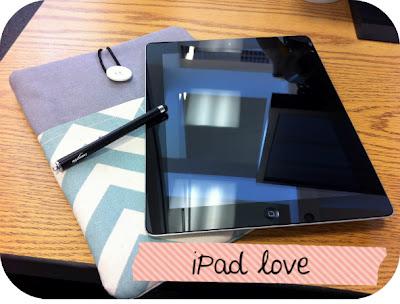
When the Tax Return Fairy graced my bank account with her presence a couple weeks ago, I knew exactly what I was going to do with her gift (and by gift I mean money-I'd-worked-for-but-the-federal-government-was-holding-for-me). I went straight to the Apple Store and picked up a shiny new iPad 2. And let me tell you: My academic life will never be the same!
I'll probably do separate posts on some of the awesome apps I love, but I just have to sing the praises of this tablet. I'm able to do so much, and it's totally boosted my productivity.
The main reason I felt like I "needed" this tool/toy was for the ability to manipulate PDFs. It's amazing! I can search databases and download full-text articles straight to the device. Then open them in Adobe Reader or iAnnotate or GoodNotes (my fave), read them much more comfortably than on a computer screen, and mark them all up--highlighting, writing, adding pages for notes... I'm actually able to read and engage with the text, which is something I've been lacking the past couple quarters.
I also bought a stylus--the BoxWave, if you're curious--which I love, and which makes note-taking easy. I can write by hand! I actually wrote the rough draft of this blog post by hand on "ruled paper" in GoodNotes--I have a Notebook for blog planning.
I'm really pleased with the iPad as an academic tool, and certainly recommend it for students--grad and undergrad alike.
Are you a student with a tablet PC or iPad? Has it made any difference in the way you do school? Do share!
P.S. I got my super cute iPad sleeve from Pink Oasis. Notice a trend? ;)
Caturday!
It's Caturday!
I ended my first presentation of library school with Keyboard Cat, so I thought I'd share it for my first Caturday post.
It's a classic.
I ended my first presentation of library school with Keyboard Cat, so I thought I'd share it for my first Caturday post.
It's a classic.
Friday Link Round-Up
Here's a few things that caught my eye this week.
I'm planning to do a round-up every week, starting....now.
I'm planning to do a round-up every week, starting....now.
- A questionnaire for wannabe grad students, or: why not everyone's cut out for academia.
- Nearly half of American adults are smartphone users. What does this mean for libraries? How can we use this to help people take advantage of our resources?
- The Lively Morgue--a tumblr of images from the NYT photo morgue.
- Google changed its privacy policy. Again. Big whoop. It's not as bad as you think.
Let me know what you think about these articles in the comments!